
Data Analysis Methods for Image Processing, Diagnosis and Control of Complex Systems.
Team involved
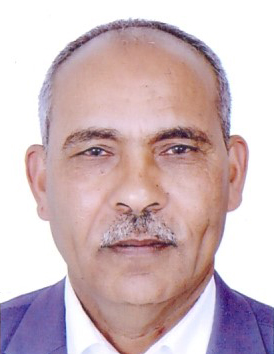 |
Name of the project manager : Messaoud Hassani - Professor |
| Name of teacher-researchers involved | Grade |
|---|---|
| Kais Bouzrara | Professor |
| Tarek Garna | Assistant Master |
| Anis Khouaja | Assistant Master |
| Anouar Ben Amor | Assistant Master |
| Ghabi Jalel | Assistant Master |
| Saber Maraoui | Assistant Master |
| Abdelkader Mbarek | Assistant Master |
| Ines Jaffel | Assistant Master |
| Chakib Ben Njima | Assistant Master |
| Walid ben Mabrouk | Assistant Master |
| Imène Laamiri | Assistant Master |
Name of doctoral students to be mobilized within the framework of the project:
|
Syrine Nafeti Khaled Dhibi Saidi Mejda Ben Afia Nesrine Hammami Dine El Houda |
Sawssen Bacha Riheb Bkekri Yousfi Marwa Jouirou Raghada Bousaada Hajer |
Kerkeni Rochdi Benamor Hajer Sondes Gharsallaoui Fatma Hamzaoui |
Monitoring, diagnostics and control of industrial systems are topics of yesterday, today and certainly tomorrow. Indeed, the development of technologies at a sustained pace, the fierce competition between manufacturers to gain market share, which has become globalized, encourage researchers to develop new approaches and / or techniques that would allow better control of these industrial processes, which have become very complex. The identification and control of these systems is part of this research. Starting from the fact that the perfect model does not exist, another level in the automation chain has been introduced. It concerns supervision and surveillance. It is within this framework that the first part of this project fits. In fact in this part one proposes to make modelization and the diagnosis of nonlinear and dynamic systems. These two characteristics are those of real processes, and they further complicate the task of researchers. Several works on the subject have been produced around the world, with more or less relevant advances. It is, in fact, from remarkable signals or indicators, to detect malfunctions and react accordingly, in order to guarantee the integrity of the process. These indicators are developed using kernel methods characterized by their efficiency in terms of generalizability. The interest of this part of the project in relation to the aspect of monitoring, diagnosis and even operational reliability of the processes is obvious.
In recent years, the theory of statistical learning, initiated by Vapnik, has seen increasing interest. These techniques exploit the theory of reproducing nuclei. The main idea is the kernel trick, allowing to transform observation data using non-linear application, in high dimensional space, where linear methods can be applied. In the proliferation of these methods, of which the Support Vector Machines are the spearhead, little work has been carried out on the opposite problem, ie the return to the space of observations. Paradoxically, although the nonlinear transformation induced by the nucleus is fundamental, the inverse return to the space of observations is often crucial. Solving this problem, known as the pre-image problem, allows new fields of application for kernel methods, including pattern recognition, feature extraction, signal denoising, and series analysis. temporal. It is within this framework that the second part of this project is developed. Indeed, the objective is to show that the kernel methods provide relevant solutions to several problems raised in signal and image processing, Different non-linear methods have been developed: the resolution of the pre-image problem under the constraints of non-negativity for pattern recognition, feature extraction and denoising, the autoregressive kernel model for time series prediction, and finally support vector machines for discrimination to improve classification performance.
Another application of kernel methods concerns the control of so-called complex systems based on models delivered by said methods.It would then be interesting to adapt two widely used control strategies, namely predictive control and control by sliding modes and to control them. test on the two real processes acquired by the laboratory. Another application of predictive control based on core methods is to regulate the heating power in smart buildings.
In fact, it is about two teams which work in parallel and which use the same tools, a first team which deals with the aspects of diagnosis and image processing and a second which will be devoted to the synthesis and the application. predictive and sliding control strategies.
Strengthening failure-prevention policies tends to raise awareness across all sectors, from scientific training to production processes. In Tunisia, many decrees aim to promote and implement guidelines for monitoring production systems in order to improve their safety. In line with this policy, our proposal focuses on improving system monitoring by training young researchers through the exploration of new tools and methods in the field of dependability for production systems.
The main objectives of this project are:
Dependability is, by nature, interdisciplinary and covers a very broad spectrum, both in terms of the methods used and the application domains concerned. By characterizing the ability to provide a specified service, dependability is formally defined as the “quality of the service delivered by the system, such that users can place justified trust in it.” A dependable system prevents or eliminates danger and keeps the process in a failure-free operating state where the level of confidence remains maximal.
This project is structured around four main axes, whose actions are presented below.
Diagnosis is essential in many application areas, for example for monitoring industrial installations, or in the context of satellite autonomy.
Model-based monitoring and diagnosis methods relying on linear models have reached a certain maturity after about twenty years of development. However, assuming linearity for the process representation model is a strong hypothesis that limits the relevance of the results. A direct extension of methods developed for linear models to arbitrary nonlinear models is difficult. In contrast, interesting results have already been obtained when the modeling approach relies on using a set of simple-structure models, where each model describes the system behavior in a specific “operating region” (defined, for example, by input values or the system state). In this context, the multimodel approach, which builds a global model by interpolating local linear models, has already produced promising results.
Conventional methods for automating the monitoring of complex systems generally fall into two broad categories:
For internal methods, diagnostic performance in terms of fault detection and fault localization depends directly on the quality of the model used. To avoid difficulties related to model quality, an alternative is to use external methods based on measured signals from the monitored system. These are well suited to revealing (linear) relationships between system variables without explicitly formulating the model that links them. In addition, it seems easier to incorporate fault detectability and isolability criteria within this class of methods.
This action relies on an application architecture that, beyond nominal system functions, implements fault detection, localization, and diagnosis functions, detection of operating-mode changes (especially those related to environmental behavior changes), as well as prognostics, fault or disturbance accommodation, and control or objective reconfiguration. These functions provide the desired responsiveness characteristics. The set of mechanisms intended to ensure dependability is commonly referred to as FDIR (Fault Detection, Isolation and Recovery) or FTC (Fault Tolerant Control).
A fault-tolerant system is characterized by its ability to maintain or recover performance under malfunction (dynamic or static) close to that achieved under normal operating conditions. Many works aimed at guaranteeing some degree of fault “tolerance” stem from classical robust control techniques (so-called “passive” approaches). More recently, there has been strong interest in “active” approaches characterized by the presence of a diagnosis module (FDI: Fault Detection and Isolation). Depending on fault severity, a new set of control parameters or a new control structure can be applied after the fault has been detected and localized.
In the literature, few works have considered delays associated with control computation time. After fault occurrence, the faulty system continues to operate under nominal control until the fault-tolerant control is computed and applied. During this period, the fault may cause severe performance loss and affect system stability.
In design, significant advances focus on ensuring risk reduction when a hazardous situation occurs through the implementation of active safety systems. This relies on using reliability databases, accounting for influence factors, and propagating uncertainties. A key point is addressing uncertainties related to component reliability data for dependability assessment, in particular using fuzzy set theories, possibility theory, or evidence theory. The main target of these studies has been Safety Instrumented Systems, for which dependability requirements are critical. The dependability performance analysis of high-integrity protection systems can be carried out using Markov models, which provide a sound formalization of the states these systems can take depending on encountered events (failure, test, maintenance, etc.) and studied parameters (failure rate, maintainability, common-cause failure, etc.).
The project is divided into 7 tasks carried out sequentially, and for some of them, in parallel.
Goal: to stay informed about the state of scientific production in the target topic.
Goal: to track progress of the work.
Goal: to develop modeling tools for complex processes. The three proposed approaches are intentionally different, with the aim of exploring their complementary aspects.
Goal: to build variables that indicate the presence of events in the data.
Goal: to develop tools for fault detection and fault characterization.
Goal: to test the developed diagnosis methods on concrete processes. This may include lab prototypes, software-simulated processes, industrial pilot processes, or partner datasets. The key point is studying implementation conditions, formulating realistic hypotheses, and analyzing discrepancies between application and theory.
Goal: to analyze and quantify the results obtained in terms of scientific output, idea exchange, and researcher training.
الهاتف: +216 71 832 418
البريد الإلكتروني:
العنوان: شارع الحرية، تونس
انضم إلينا لتعلم لغة جديدة في بيئة غنية!
هل أنت مشدود بجمال مناظر كابادوكيا، وعظمة التاريخ العثماني، ولحن اللغة التركية؟
يقدم لكم معهد بورقيبة للغات الحديثة تجربة غمر لغوي أصيلة مع معلمين ناطقين باللغة التركية.

تم تصميم برامجنا لتناسب مستواك، سواء كنت مبتدئًا أو متقدمًا.

تعلم هذه اللغة مع معلمين لغتهم الأم هي التركية. سيوصلون لك ليس فقط تفاصيل اللغة ولكن أيضًا الفروق الثقافية.

بفضل أساليب التعليم التفاعلية والحديثة، يصبح تعلم التركية تجربة مثيرة وغنية.
انطلق في غزو العالم الرائع لهذا البلد!
| حجم الساعات | الفترة | رسوم التسجيل | |
|---|---|---|---|
| دورة سنوية (موسعة) |
4 ساعات/أسبوع | أكتوبر - مايو | 120 د. ت |
| دورة حسب الطلب | 56 ساعة | حسب الطلب | * |
| جلسة صيفية | 80 ساعة | يوليو | 120 د. ت |
Page 3 of 9
 FR
FR  EN
EN